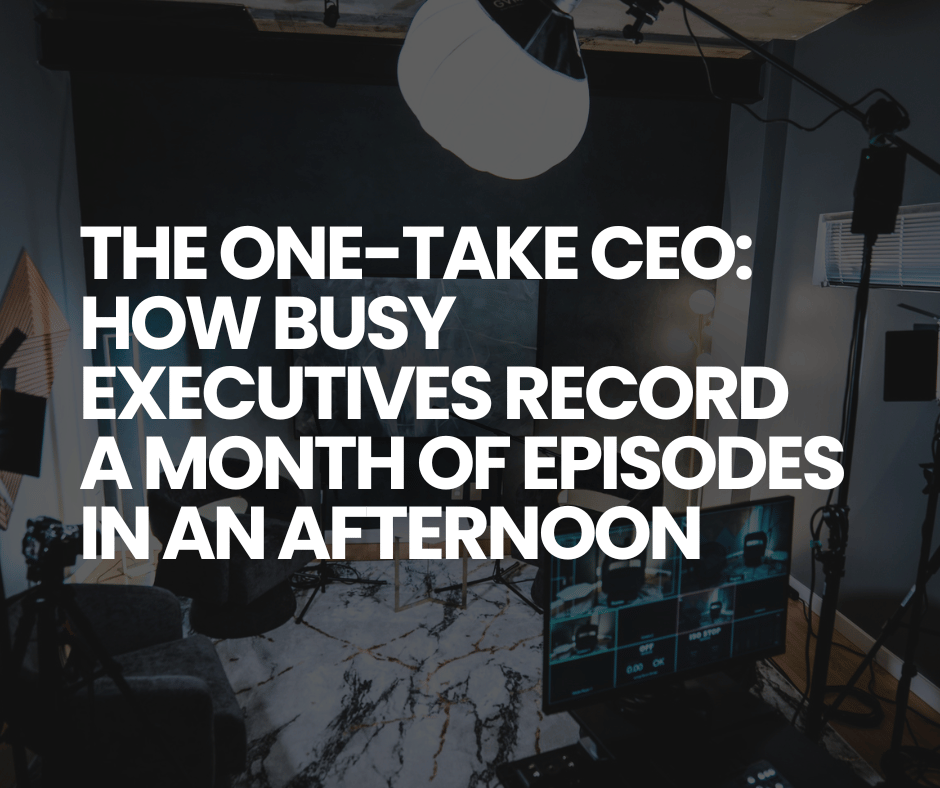
The One-Take CEO: How Busy Executives Record a Month of Episodes in an Afternoon
A weekly podcast sounds simple until you try to run one alongside a company. Recording once a week means finding an hour, every single week, indefinitely — around board prep, travel, quarter-end, a hiring crunch, a client fire. For most CEOs, that’s not a scheduling inconvenience. It’s the single biggest reason executive podcasts go quiet after episode six.
The fix isn’t recording less often. It’s recording differently. Batch recording — sitting down for a single, focused studio session and coming out the other side with a month or more of episodes — solves the scheduling problem at its root instead of fighting it every week.
Why Weekly Recording Breaks Down for Executives
A weekly cadence works fine for a creator whose calendar is built around content. It works terribly for a CEO whose calendar is built around everything else, with the podcast squeezed into whatever’s left. The moment a launch, a board meeting, or a crisis eats “podcast Tuesday,” the show either skips a week (which erodes listener habit fast) or gets recorded in a rushed, distracted state that shows on the recording.
Batch recording removes the weekly dependency entirely. Instead of protecting one hour every week for months, a CEO protects one longer block — half a day, once a month or once a quarter — and walks away with enough finished conversations to publish on a steady cadence without touching a microphone again until the next session.
What a Batch Session Actually Looks Like
The mechanics are simpler than most executives expect. In a single studio visit:
Pre-session prep replaces weekly prep. Instead of prepping for one episode a week, the CEO (or their team) preps talking points, guest questions, or topic outlines for four to eight episodes in one sitting — usually a two-hour prep exercise instead of eight separate one-hour scrambles.
Wardrobe and setting get handled once. A minor but real friction point in batch video recording is looking like you recorded four episodes in one day. A good studio partner manages this with simple wardrobe changes, lighting resets, and pacing between segments so the finished episodes don’t feel visibly identical.
Energy management becomes the real skill. Recording six conversations back-to-back is a different kind of demanding than recording one. The most successful batch sessions build in real breaks, vary the topics and formats (a solo segment, a guest interview, a quick-take Q&A) to keep energy up, and stop before quality visibly drops rather than pushing through a full day for the sake of hitting a number.
The Math That Makes This Worth It
Compare the calendar cost. Weekly recording over a quarter means thirteen separate interruptions to a CEO’s schedule, each requiring its own context-switch into “podcast mode” and back out. A quarterly batch session means one interruption — a planned half-day — producing the same thirteen episodes. The content output is identical. The number of times the calendar gets disrupted drops by more than 90%.
This is also, quietly, a production cost advantage. A studio session booked once covers setup, lighting, and crew time across many episodes instead of one, which is typically far more efficient than paying for that same setup thirteen separate times.
What CEOs Get Wrong the First Time They Try It
The most common mistake is treating a batch session like eight identical episodes recorded back-to-back with no variation — which produces eight episodes that feel eerily similar to a listener bingeing them in sequence. The fix is planning format variety into the session itself: mix solo commentary, guest conversations, and shorter “quick take” segments so the batch doesn’t just feel like a marathon interview split into pieces.
The second common mistake is under-prepping. A CEO who shows up to record eight episodes with only a vague sense of eight topics will burn through the energy needed for genuinely sharp answers by episode four. A short, focused prep session — even twenty minutes per topic, done in advance — pays for itself many times over across a full batch day.
Who This Works Best For
Batch recording is close to essential for any executive-hosted show, and especially valuable for CEOs who travel frequently, run lean teams without dedicated marketing support, or have tried and abandoned a weekly cadence at least once already. It’s less necessary for shows with a dedicated internal producer managing weekly logistics — though even those teams often find quarterly batching frees up meaningful time elsewhere.
Making It Repeatable
The real win isn’t the first batch session — it’s making batching a standing part of the calendar instead of a one-time experiment. That means booking the next session before finishing the current one, building a running list of topics and potential guests between sessions, and having a production partner who handles everything after “stop recording” so the batch day is truly the only time investment required.
If a weekly podcast cadence has been quietly draining your calendar — or keeping you from starting a show at all — batch recording might be the format that finally makes it sustainable. Talk to PS Creative about structuring a batch session built around your schedule, not the other way around.